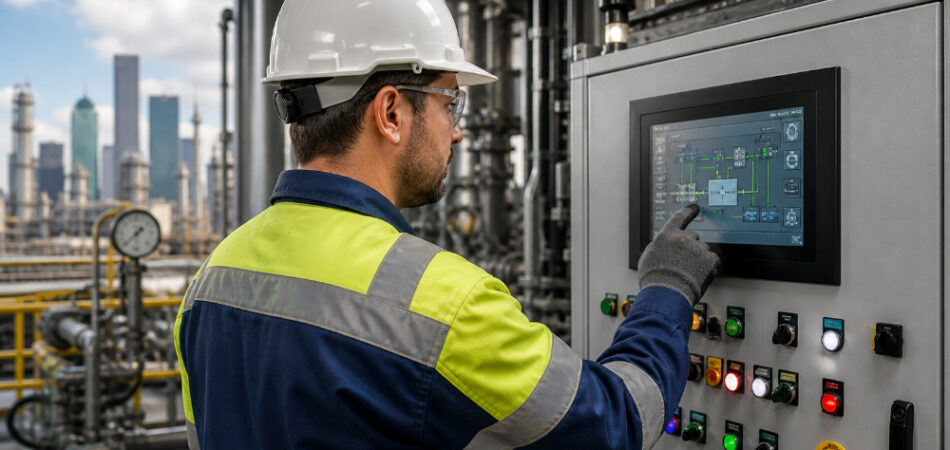
Houston is one of the most industrially active cities in the United States. From petrochemical refineries to large-scale manufacturing plants, the city’s industrial backbone supports thousands of jobs and drives significant economic output across Texas. With that level of industrial activity comes an equally significant responsibility: maintaining safe, compliant, and efficient operations at every level of the production process. One of the most critical, and often overlooked, aspects of this responsibility is keeping control systems up to date.
For facility managers, safety officers, and plant engineers across Houston, OSHA compliance is not a one-time checkbox. It is an ongoing commitment that demands regular evaluation of equipment, procedures, and technology. As standards evolve and aging infrastructure becomes less reliable, control system upgrades have become a central strategy for staying ahead of regulatory requirements and protecting workers from preventable hazards.
Why Control Systems Degrade Over Time
Every control system has a lifecycle. What was cutting-edge technology a decade ago may now fall short of current safety standards, lack manufacturer support, or simply be unable to interface with modern monitoring and reporting tools. In Houston’s industrial sector, many facilities still operate with legacy systems that were installed in the 1990s or early 2000s. While these systems may still function, they often lack the redundancies, fail-safes, and communication capabilities that today’s OSHA industrial safety systems require.
When a control system ages beyond its intended service life, the risks multiply. Components become harder to source, and qualified technicians who understand older platforms become increasingly rare. More importantly, outdated systems are less capable of detecting faults in real time, which means that when something goes wrong, the window for intervention narrows considerably. In high-stakes industrial environments common throughout Texas, that narrowing window can be the difference between a near-miss and a catastrophic incident.
Electrical compliance is another area where aging systems frequently fall short. Wiring standards, panel configurations, and grounding requirements have been updated significantly over the years. A system installed under older National Electrical Code (NEC) guidelines may not meet current OSHA electrical compliance requirements, leaving facilities vulnerable to citations, fines, and more seriously, electrical hazards that endanger workers.
The Regulatory Landscape in Texas and What OSHA Expects
OSHA’s General Industry Standards cover a broad range of requirements that apply directly to control systems and automated safety infrastructure. Standards related to lockout/tagout procedures, machine guarding, process safety management, and electrical systems all intersect with the way control systems are designed, maintained, and operated. Facilities in Houston that fail to align their control infrastructure with these standards face not only financial penalties but also the reputational and legal consequences that follow a serious workplace incident.
Texas operates under federal OSHA jurisdiction, meaning that Houston facilities must comply with federal standards without the added layer of a state-run OSHA program. This places the full weight of federal enforcement directly on employers. OSHA inspectors in Texas have broad authority to conduct both scheduled and unannounced inspections, and they are increasingly focused on process safety in the petrochemical and refining industries that define so much of Houston’s industrial landscape.
For facilities running automated safety controls, compliance means more than just having the right hardware in place. It means being able to demonstrate that safety functions are validated, that systems are regularly tested, and that documentation supports every critical decision point within the control architecture. An outdated system may have no mechanism for generating the audit trails and electronic records that modern compliance frameworks demand.
How Automated Safety Controls Reduce Risk and Support Compliance
Automated safety controls represent one of the most effective investments a Houston facility can make toward both regulatory compliance and operational resilience. Unlike manual systems that depend on operator response times and human consistency, automated safety controls execute predefined logic in milliseconds. They monitor pressure, temperature, flow rates, and equipment status continuously, and they initiate protective actions without waiting for human input when critical thresholds are crossed.
This capability is especially valuable in industries common to Texas, including oil and gas processing, chemical manufacturing, and power generation. In these environments, the consequences of delayed response can escalate quickly. Automated safety controls, when properly designed and maintained, act as the last line of defense before a process upset becomes a safety emergency.
From a compliance standpoint, modern automated safety systems are designed to align with recognized safety standards, including IEC 61511 for process safety and ISA 84 guidelines for safety instrumented systems. Upgrading to systems that comply with these frameworks helps Houston facilities demonstrate due diligence to OSHA inspectors and positions them well for third-party audits. The investment in a control systems upgrade is also an investment in documentation, validation, and traceability, all of which are essential to a defensible compliance record.
Planning a Control System Upgrade in Houston
Executing a successful control system upgrade requires more than simply swapping out old hardware for new. It demands a systematic approach that begins with a thorough assessment of existing systems, identifies gaps between current capabilities and regulatory requirements, and develops a phased implementation plan that minimizes operational disruption.
For Houston facilities, the assessment phase should address several key areas. First, electrical compliance must be evaluated against current NEC and OSHA standards. This includes a review of panel configurations, grounding systems, conduit and wiring methods, and the condition of any existing safety relays or interlocks. Any components that fall outside of current standards should be flagged for priority replacement.
Next, the functional capabilities of existing control architecture should be assessed in relation to process safety requirements. This means reviewing logic configurations, alarm management strategies, and the integration of safety instrumented functions. Facilities that operate under OSHA’s Process Safety Management (PSM) standard have additional obligations, including the maintenance of up-to-date process hazard analyses and management of change documentation whenever control systems are modified.
Partnering with experienced engineers who specialize in industrial safety systems in Texas is essential at this stage. Local expertise matters because Houston’s industrial environment has specific characteristics, including extreme heat, humidity, and the prevalence of hazardous materials, that influence both equipment selection and installation practices. An engineer familiar with the regional landscape will also understand the enforcement priorities of OSHA’s Houston-area offices, which can help facilities focus their compliance efforts where they matter most.
Once the assessment is complete and a plan is in place, the upgrade process itself should be carefully staged. Shutting down an entire facility for a wholesale system replacement is rarely practical or economical. Instead, most Houston facilities benefit from a phased approach that addresses the highest-risk components first, maintains operational continuity where possible, and systematically brings each section of the facility into compliance over a defined timeline.
Throughout the process, documentation is critical. Every change to the control system should be captured in updated engineering drawings, logic documentation, and as-built records. This documentation not only supports OSHA compliance but also serves as the foundation for future maintenance, troubleshooting, and any subsequent upgrades.
Conclusion
For industrial facilities across Houston, maintaining OSHA compliance is inseparable from the condition and capability of their control systems. Aging infrastructure, gaps in electrical compliance, and the absence of modern automated safety controls all create risk, both for workers and for the organizations responsible for their safety. A proactive approach to control system upgrades is not just a regulatory obligation; it is a sound operational and ethical decision. By investing in updated industrial safety systems that meet current standards, Houston facilities strengthen their compliance posture, reduce the likelihood of serious incidents, and demonstrate the kind of commitment to worker protection that defines responsible industrial operations in Texas.